5 Indonesian Pantry Staples That Aren't Sambal (But Deserve a Permanent Spot in Your Fridge)
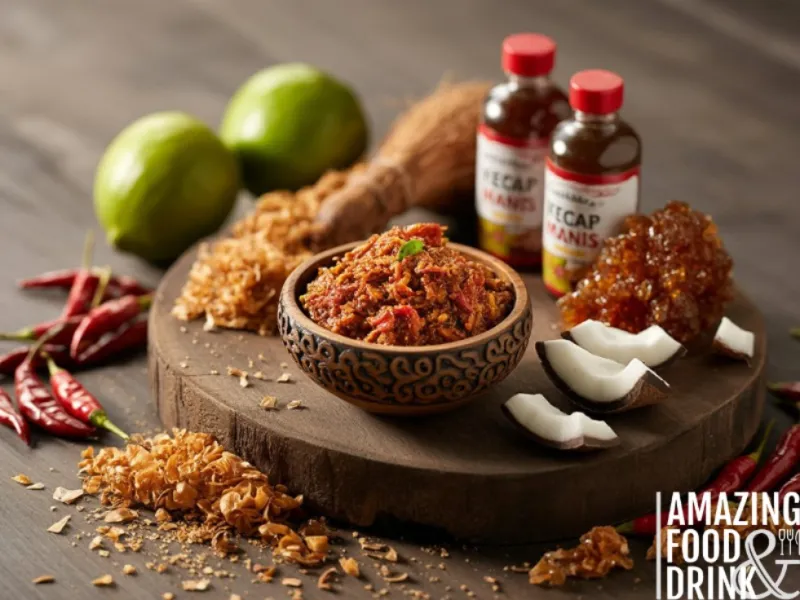
Photo: Indonesian condiments kecap manis terasi shrimp paste pantry ingredients, via amazingfoodanddrink.com
Let's be honest — sambal has had an incredible run. It's shown up on restaurant menus from Brooklyn to Portland, landed on grocery store shelves nationwide, and earned a devoted following among American hot sauce lovers who are ready to graduate from Sriracha. Sambal deserves every bit of that attention.
But if sambal is your only entry point into Indonesian condiments, you're missing most of the story.
Indonesian cuisine is one of the most condiment-rich food cultures on the planet. Across more than 17,000 islands and dozens of distinct regional traditions, cooks have developed an incredible range of pastes, sauces, and fermented ingredients that add depth, complexity, and flat-out deliciousness to everything from grilled meats to simple steamed rice. The good news for US-based home cooks? More of these ingredients are accessible than ever before — at Asian grocery stores, Indonesian specialty retailers, and online.
Here are five that deserve a spot in your regular rotation.
1. Kecap Manis — The Sweet Soy Sauce You Didn't Know You Needed
Flavor profile: Think soy sauce, but slow down. Kecap manis (pronounced roughly keh-chap MAH-nees) is a thick, syrupy Indonesian sweet soy sauce made with palm sugar and aromatics. It's deeply savory with a molasses-like sweetness and a faint spiced warmth. The texture is closer to a glaze than a pourable sauce.
Why it's special: This is the backbone of nasi goreng, the beloved Indonesian fried rice, but its uses stretch way beyond that. A splash of kecap manis in a stir-fry adds a caramelized depth that regular soy sauce simply can't replicate. It's incredible as a quick marinade for chicken thighs or pork tenderloin before grilling, and it makes a legitimately great dipping sauce when combined with a little fresh chili and lime.
US cooking uses: Swap it in anywhere you'd use a teriyaki glaze. Use it to finish fried rice or noodles. Drizzle over a fried egg on top of avocado toast if you want to quietly blow your own mind.
Where to buy: ABC brand kecap manis is the most widely available in the US and can be found at most Asian grocery stores. For a more premium option, look for small-batch versions from Indonesian specialty importers.
2. Terasi — The Funky, Fermented Secret Weapon
Flavor profile: Terasi (also spelled trassi) is an Indonesian shrimp paste — dried, fermented, and pressed into blocks or sold as a paste. It smells aggressively funky straight out of the package. This is not a bluff. But cook it, even briefly, and it transforms into something savory, complex, and deeply umami-forward in a way that's hard to describe until you've experienced it.
Why it's special: Terasi is to Indonesian cooking what anchovies are to Italian — a background player that quietly makes everything taste more like itself. It shows up in sambal, in bumbu spice pastes, and in countless traditional dishes across Java and beyond. A small amount goes a long way, and it adds a savory foundation that you'll notice immediately if you leave it out.
US cooking uses: Add a small amount (start with a pea-sized portion) to homemade stir-fry sauces, marinades, or any dish where you want to boost savory depth without adding more salt. It's excellent in Southeast Asian-inspired salad dressings and absolutely essential if you want to make a proper sambal from scratch.
Where to buy: Look for it at Asian grocery stores, often in the refrigerated section or in vacuum-sealed packaging. Indonesian specialty online retailers typically carry several varieties. Store it in the fridge once opened.
3. Kecap Asin — The Everyday Soy Sauce with an Indonesian Spin
Flavor profile: Kecap asin is Indonesian-style salty soy sauce — thinner than kecap manis and more savory-forward, but with a slightly different character than Chinese or Japanese soy sauces. It tends to be a touch less sharp and more rounded.
Why it's special: It's the unsung everyday workhorse of the Indonesian kitchen. While kecap manis gets the spotlight, kecap asin is what Indonesian home cooks reach for when they need a savory hit without sweetness. It plays well with others and won't overpower the aromatics and spices that are doing the heavy lifting in a dish.
US cooking uses: Use it anywhere you'd use regular soy sauce, but especially in Indonesian-inspired dishes where you want to keep sweetness in check. It's great in dipping sauces, soups, and braised dishes.
Where to buy: ABC brand also produces kecap asin, available at most Asian grocery stores. It's often stocked right next to the kecap manis.
4. Bumbu Pecel — The Peanut Sauce That's Not from a Packet
Flavor profile: Bumbu pecel is a spiced peanut paste used to make pecel — an Indonesian salad of blanched vegetables dressed in a punchy peanut sauce. Unlike the mild peanut sauces you might find at a generic Asian-fusion restaurant, bumbu pecel has real heat, a citrusy kaffir lime note, and a savory complexity from galangal and other aromatics. It's bold and a little addictive.
Why it's special: This is not the watered-down peanut sauce of your local takeout spot. Bumbu pecel is the real deal — earthy, spicy, and rich in a way that makes plain grilled chicken or tofu suddenly taste like a destination meal. It also dissolves easily into warm water or coconut milk to make a sauce, which means weeknight prep is genuinely fast.
US cooking uses: Thin it out and use it as a sauce for noodles, as a dipping sauce for satay, or as a dressing for grain bowls with roasted vegetables. It's also excellent tossed with shredded rotisserie chicken for a quick, flavor-packed meal.
Where to buy: Look for it at Indonesian grocery stores or order online. Brands like Bamboe and Indofood produce ready-made bumbu pecel pastes that are easy to work with.
5. Petis Udang — The Dark Horse of Indonesian Condiments
Flavor profile: Petis udang is a thick, dark shrimp paste made by reducing shrimp cooking liquid with sugar until it becomes a concentrated, almost jam-like condiment. The flavor is intensely savory and sweet at the same time, with a briny depth that's unlike anything else in the pantry. It's particularly associated with Javanese and East Javanese cuisine.
Why it's special: Petis is the secret ingredient in rujak cingur, a famous Surabayan salad, and it shows up in various street foods across East Java. It's the kind of ingredient that makes you stop mid-bite and think, what is that? — in the best possible way. It's also one of the harder-to-find Indonesian condiments in the US, which makes sourcing it from a specialty retailer genuinely worthwhile.
US cooking uses: Use it sparingly as a flavor booster in noodle soups, stir-fries, or dipping sauces. A small amount stirred into a Southeast Asian-inspired broth adds a dimension that's hard to pin down but impossible to ignore.
Where to buy: Your best bet is an Indonesian specialty online retailer or a well-stocked Asian grocery store in a city with a significant Indonesian or Malaysian community.
Start Small, Cook Big
You don't need all five of these on your shelf by next week. Start with kecap manis — it's the most immediately useful, the easiest to find, and the one that will deliver an obvious payoff the first time you use it. From there, add terasi when you're ready to go deeper, and work your way through the list at whatever pace feels right.
The point isn't to overhaul your pantry. It's to expand your flavor vocabulary one bottle and one jar at a time — until Tuesday night dinner stops tasting like Tuesday night dinner and starts tasting like something worth sitting down for.