Why Indonesian Cooks Grind Everything — And What Happens to Flavor When You Skip That Step
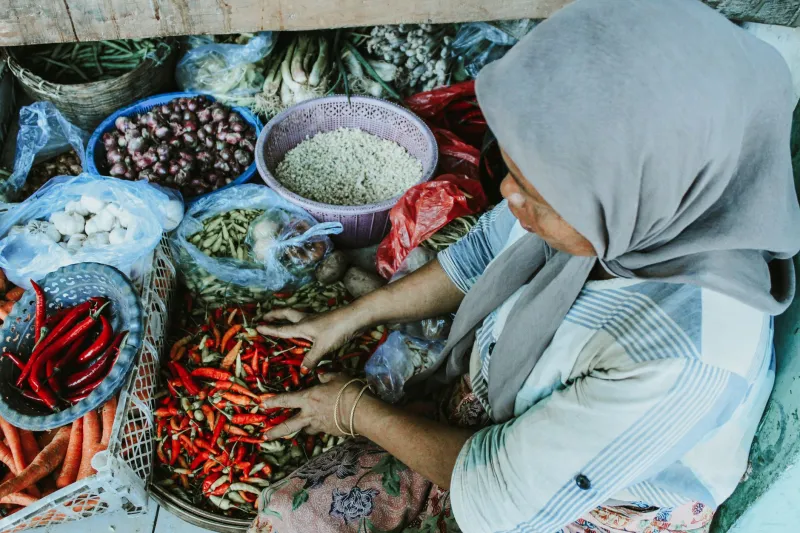
Let's say you're making a chicken dish. You could season it with garlic powder, a pinch of ginger, maybe some dried coriander. Toss it in the pan, done in twenty minutes. It'll taste fine.
Or you could do what an Indonesian cook would do: take fresh shallots, garlic, ginger, galangal, turmeric, and chilies, grind them into a rough, fragrant paste, and cook that paste in oil until it smells like the base of something genuinely great. Same core ingredients. Completely different result.
That difference isn't just about freshness, though that matters too. It's about a technique that's so fundamental to Indonesian cooking that the cuisine basically doesn't function without it. It's called bumbu, and once you understand it, you'll stop reaching for the spice jar first.
What Bumbu Actually Is (And Isn't)
Bumbu simply means spice blend or seasoning paste in Indonesian. But in practice, it refers to the wet, ground aromatic bases that form the flavor foundation of most Indonesian dishes. Think of it less like a spice blend and more like a living sauce — one that gets cooked directly into the dish rather than sprinkled on top.
A basic bumbu might include shallots, garlic, fresh chilies, ginger, and a little turmeric. A more complex version — like the paste for rendang or gulai — might add galangal, lemongrass, candlenuts, and dried spices like coriander and cumin. The specific combination changes by region, by dish, and by family. But the method stays constant: you grind these ingredients together into a cohesive paste, then cook that paste in oil until it's fragrant, deeply colored, and no longer raw-tasting.
That cooking step is crucial. It's where the magic actually happens.
The Science Behind Why This Works So Well
When you grind fresh aromatics together, you're doing something that simply cannot happen in a dry spice blend: you're creating emulsified flavor compounds. The moisture from fresh shallots and ginger mingles with the oils in garlic and chilies. The cell walls of every ingredient get broken down simultaneously, allowing their volatile compounds to interact and begin building complexity before the pan even gets hot.
Then, when you cook that paste in oil at medium heat — a process that usually takes anywhere from eight to fifteen minutes — you're triggering the Maillard reaction across multiple ingredients at once. The sugars in shallots caramelize. The allicin in garlic mellows and deepens. The gingerols in ginger transform into shogaols, which are more intense and penetrating. The whole paste concentrates, loses its raw edge, and develops a richness that no dry spice blend can replicate because dry spice blends don't have the moisture, the enzymes, or the structural complexity to go through that transformation.
Dry spices have their place. But they're adding flavor to a dish. A properly cooked bumbu is the flavor of a dish.
When to Grind, When to Pound, When to Toast
Not every aromatic needs the same treatment, and Indonesian cooks are precise about this in ways that often go unnoticed.
Grinding in a blender or food processor works well for wet pastes when you're dealing with high-moisture ingredients like shallots, fresh chilies, and ginger. A little splash of water (or oil) helps the blades catch. The result is a smoother paste — fine for most everyday cooking and totally acceptable if you don't have a stone mortar.
Pounding with a mortar and pestle produces a coarser, more textured paste that many Indonesian cooks — and an increasing number of chefs in the US who've worked with Indonesian cuisine — argue produces superior flavor. The crushing action, as opposed to the slicing action of a blender blade, ruptures cells differently and releases more of the aromatic oils. It's slower, but the texture of the paste you get is harder to achieve any other way. If you're making sambal or a bumbu for something where texture matters, this is worth the effort.
Dry toasting is reserved for whole dried spices — coriander seeds, cumin, cloves, and the like — before they get ground or added to a paste. A dry pan over medium heat for two to three minutes wakes up the volatile oils that have been sitting dormant in the seed. You'll know it's working when the kitchen starts smelling like something. Toasted coriander smells earthy and citrusy in a way that the untoasted version simply doesn't. Always toast whole dried spices before using them in a bumbu; it's a small step that makes a noticeable difference.
A Framework for Using This in Your Own Kitchen
You don't need to be making rendang to use this approach. The bumbu technique applies to pretty much any savory dish you're already making.
Start simple: instead of adding minced garlic and ginger separately to your next stir-fry or braise, blend them together with a shallot or two and a fresh chili (if you want heat). Cook that paste in your oil first, before any protein or vegetables go in. Give it real time — eight minutes minimum — stirring occasionally, until it smells deeply savory and has darkened slightly. Then build your dish on top of it.
The difference in depth will be immediate and obvious. That's the bumbu effect.
As you get more comfortable, start adding complexity: a coin of fresh galangal, a stalk of lemongrass trimmed and bruised, a pinch of pre-toasted coriander ground in with the rest. The base gets richer, and the dish built on top of it gets more layered without requiring any additional ingredients at the finishing stage.
Why Your Blender Deserves a Bigger Role
American home cooks tend to use blenders for smoothies and soups. Indonesian cooks use them to build the foundation of almost every savory dish they make. It's a shift in how you think about the tool — and about where flavor actually comes from.
Powders are shortcuts. Pastes are foundations. And in Indonesian cooking, the foundation is everything.