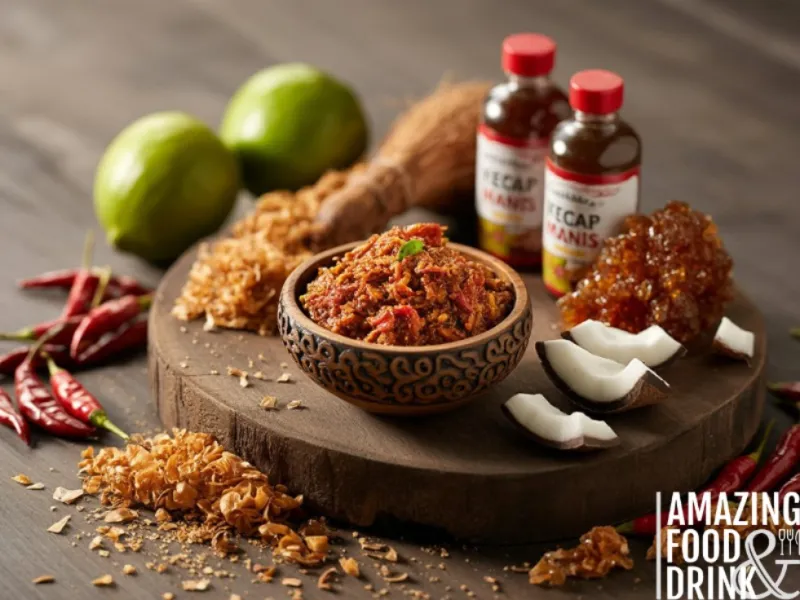
7 Indonesian Spice Blends You've Never Heard Of (And Why That Needs to Change)
Somewhere along the way, "Asian spices" in America got collapsed into a pretty short list. Five-spice powder. Curry powder. Maybe garam masala if you're feeling adventurous. These are fine things. But they represent a tiny sliver of what's actually happening across the largest archipelago on earth — a place where the spice blend traditions are so varied, so region-specific, and so deeply layered that a cook from West Java and a cook from North Sulawesi might not recognize each other's kitchen by smell alone.
Indonesian bumbu — the word covers both wet spice pastes and dry spice blends — are the engine of one of the world's most underappreciated food cultures. They're built from combinations of fresh aromatics, dried spices, fermented ingredients, and regional wild cards that don't map neatly onto anything else in the global pantry. And right now, almost none of them have made it onto American kitchen counters.
That's a genuine gap. Let's close it.
What Makes Indonesian Spice Blends Different
Before we get into the specifics, it helps to understand the structure. Most Indonesian bumbu start with a base of fresh aromatics — shallots, garlic, galangal, lemongrass, turmeric, chilies — that get ground into a paste, either by hand with a stone mortar (cobek and ulekan) or in a modern blender. Dried spices get layered in: candlenuts for body, coriander for earthiness, cumin in some regional traditions. Then come the wild cards: shrimp paste (terasi), tamarind, kaffir lime leaves, daun salam.
The result isn't a single flavor note. It's a chord — multiple things happening at once, with brightness, depth, heat, funk, and fragrance all present simultaneously. That's what makes these blends so different from a single-origin curry powder or a simple five-spice mix. They're fundamentally about complexity.
Here are seven worth knowing.
1. Bumbu Kuning — The Golden Base
This is arguably the most versatile bumbu in the Indonesian repertoire, and it gets its name from the deep golden color that fresh turmeric gives it. Bumbu kuning forms the flavor foundation for everything from fish dishes to chicken and vegetable soups across Java, Bali, and beyond.
The blend typically includes turmeric, galangal, lemongrass, shallots, garlic, candlenuts, coriander, and ginger. The result is warm, slightly earthy, and gently fragrant — nothing aggressive, just deeply savory with a subtle citrus edge from the lemongrass.
Easy entry dish: Soto Ayam, a clear golden chicken soup that's one of Indonesia's most beloved comfort foods. Make the bumbu kuning, fry it briefly in oil to bloom the aromatics, add chicken stock and poached chicken, and finish with hard-boiled eggs, fried shallots, and a squeeze of lime.
2. Bumbu Rawit — For the Heat Seekers
Rawit refers to the small, ferociously hot bird's eye chilies that show up throughout Indonesian cooking. Bumbu rawit is built around them — a fiery paste that doesn't hide what it is. But it's not just heat. Shallots, garlic, and a hit of terasi (fermented shrimp paste) give it a savory, almost funky backbone that makes the heat feel purposeful rather than punishing.
Easy entry dish: Ayam Geprek — smashed fried chicken doused in bumbu rawit. It's exactly as good as it sounds and has become one of Indonesia's most popular street foods for a reason.
3. Bumbu Bali — The Island's Signature Intensity
Balinese cooking has its own distinct spice identity, and bumbu Bali is the proof. Compared to Javanese blends, it's more aggressive — more chilies, more terasi, often a hit of dried galangal (kencur) that adds a sharp, almost medicinal note. Lemongrass and kaffir lime leaves are essential. The result is bold, complex, and unmistakably Balinese.
Easy entry dish: Bebek or Ayam Betutu — slow-cooked duck or chicken wrapped in bumbu Bali and banana leaves, then roasted or steamed until the meat is falling-apart tender and completely saturated with spice.
4. Bumbu Rendang — The Long Game
Rendang is famous. The bumbu behind it is less understood. It's a dry-ish blend that starts with fresh aromatics — galangal, lemongrass, chilies, shallots, garlic — but the magic happens over hours of slow cooking in coconut milk until the liquid evaporates and the spices essentially fry in the rendered coconut fat, creating a dark, intensely concentrated crust on the meat.
The spice profile includes kaffir lime leaves, turmeric leaf (different from the root — more floral), and often a touch of kerisik (toasted grated coconut) to thicken and add nuttiness.
Easy entry dish: Rendang Daging — slow-cooked beef rendang. It takes time, but almost none of it is active work. The stove does everything.
5. Bumbu Pecel — The Nutty Outlier
Pecel is a Javanese salad dish, and its bumbu is unlike anything else on this list: a thick, peanut-forward sauce that's more sweet and tangy than it is hot or savory. Roasted peanuts, palm sugar, tamarind, kaffir lime leaves, galangal, and chilies combine into something that reads almost like a dressing — bright, rich, and addictive.
Easy entry dish: Gado-Gado, the beloved Indonesian peanut sauce salad with blanched vegetables, tofu, tempeh, and hard-boiled eggs. It's one of the most approachable Indonesian dishes for American home cooks and a perfect first project.
6. Bumbu Woku — The Herby North
Woku comes from North Sulawesi and it's an herb-heavy, fragrant blend that feels almost Mediterranean in its brightness — until the chilies and terasi remind you exactly where you are. Lemongrass, pandan leaves, turmeric, tomato, green onion, and an abundance of fresh basil (kemangi, a more delicate variety than Italian basil) give it an almost floral, green quality.
Easy entry dish: Ikan Woku — a whole fish or fish fillets cooked in bumbu woku with a splash of water until everything is steaming and fragrant. It's fast, it's fresh, and it'll make you rethink what a spiced fish dish can be.
7. Bumbu Semur — The Sweet Soy Blend
Semur is Indonesia's answer to a braised dish, and its bumbu leans heavily on sweet soy sauce (kecap manis) alongside warming spices like nutmeg, cloves, and white pepper — a flavor combination that shows the direct influence of Dutch colonial-era cooking on the Indonesian pantry. It's rich, slightly sweet, and deeply savory.
Easy entry dish: Semur Daging — braised beef in sweet soy and spice. It's a weeknight dinner that punches well above its effort level.
Where to Start
If this list feels overwhelming, pick one. Bumbu kuning is the most forgiving and the most versatile — a great first bumbu for anyone new to Indonesian cooking. Once you've made it from scratch and tasted what it does to a simple chicken dish, the other six will start calling to you.
The whole point of bumbu is that it's not a shortcut or a shorthand. It's the actual cooking — the part where you decide what your food is going to taste like. Once you start building these blends yourself, the idea of reaching for a jar of generic curry powder starts to feel like a real step down.